
Legal & Compliance

Ontario Landlord Tenant Law: What Ottawa Landlords Must Know

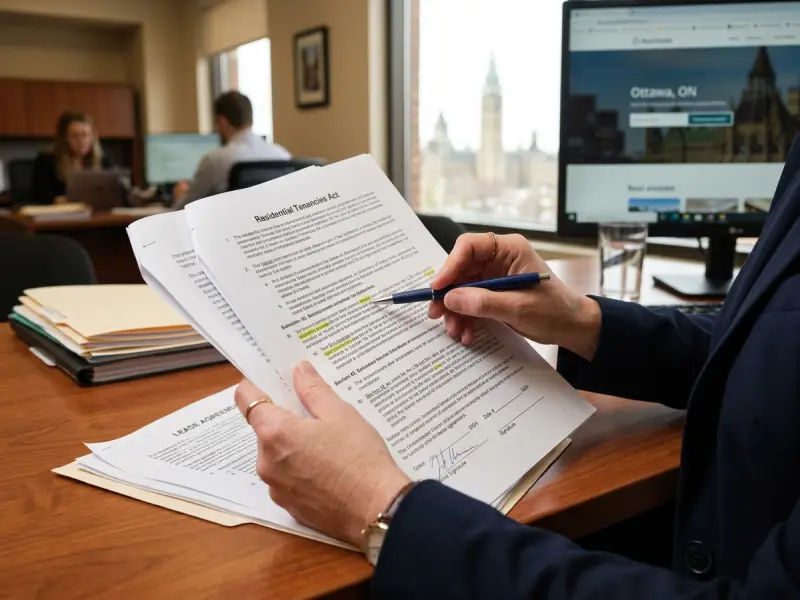
Ontario's Residential Tenancies Act (RTA) governs the relationship between landlords and tenants. Understanding your legal obligations isn't optional — it protects you from costly mistakes and tribunal disputes. This guide covers what Ottawa landlords need to know about RTA requirements, eviction procedures, maintenance obligations, and tenant rights.

The Fundamentals

What the RTA Covers

The Residential Tenancies Act applies to most residential rental units in Ontario, including apartments, houses, condominiums, basement apartments, and rooms in a house (with some exceptions). It establishes the legal framework governing the relationship between landlords and tenants.

Key Governing Bodies: The Landlord and Tenant Board (LTB) handles disputes, eviction applications, and rent increase approvals above guideline. The Rental Housing Enforcement Unit investigates illegal lockouts, harassment, and maintenance issues.

Not covered by the RTA: living accommodations where you share a kitchen or bathroom with the owner or owner's family, seasonal or temporary accommodations, some student residences, nursing homes and care facilities, and hotels and motels.

What the RTA Covers
Coverage Overview

What the RTA Covers vs. Doesn't Cover

Understanding the scope of Ontario's Residential Tenancies Act is essential for compliance.

check-circle

Covered Units

Apartments, houses, condominiums, basement apartments, and rooms in houses

check-circle

Landlord Responsibilities

Maintenance, repairs, rent increase limits, and respecting tenant rights

check-circle

Tenant Protections

Privacy, quiet enjoyment, protection against illegal evictions and harassment

x-circle

Exemptions

Shared accommodations with owner, seasonal stays, student residences, care facilities

x-circle

Post-2018 Units

Units first occupied after November 15, 2018 are exempt from rent control guidelines

x-circle

Short-Term Rentals

Hotels, motels, and other short-term commercial accommodations

Legal Notice Forms

Notice Types and Notice Periods

The Landlord and Tenant Board requires specific notice forms for different situations. Below is a summary of common notice types and their required notice periods.

Notice Form Reason Notice Period Tenant Can Remedy?
N1 Rent Increase 90 days No (if within guideline)
N4 Non-payment of Rent 14 days Yes (pay rent + costs)
N5 Substantial Breach 7 days Yes (stop behavior)
N6 Illegal Activity Immediately No
N7 Persistent Behavior 30 days Yes (change behavior)
N12 Personal Use 60 days No (must occupy)
N13 Demolition/Conversion 120 days No
"You cannot evict a tenant simply because you want to. The RTA specifies legal grounds for eviction, and the Landlord and Tenant Board enforces these protections strictly."
Ontario Residential Tenancies Act
Provincial Legislation
Legal Process

The Eviction Process: Step-by-Step

Serve Notice

Serve the appropriate notice form (N4 for non-payment, N12 for own-use, N5 for substantial breach, etc.) in accordance with RTA requirements. Ensure proper service and document everything.

Waiting Period

Tenant has time to remedy the issue or vacate. The period varies by notice type: 14 days for N4 (non-payment), 30 days for N7 (persistent behavior), 60 days for N12 (personal use), 120 days for N13 (demolition).

LTB Application

If the tenant doesn't leave or remedy the situation, apply to the Landlord and Tenant Board. Include all evidence, notices served, and documentation of the breach or non-payment.

LTB Hearing

Present your case to an LTB adjudicator. The tenant may contest your application. Be prepared with evidence, witnesses if needed, and clear documentation. Learn more about <a href='/blog/understanding-ltb-process/'>understanding the LTB process</a>.

Eviction Order

If grounds are proven, the LTB issues an eviction order. The order specifies a date by which the tenant must vacate. If they don't leave voluntarily, proceed to enforcement.

Sheriff Enforcement

File the eviction order with the Sheriff's office. They enforce physical removal if the tenant hasn't vacated. This typically occurs 30+ days after the order. Timeline: This entire process can take 3-6 months or longer.

Your Obligations

Landlord Maintenance & Legal Obligations

  • Maintain rental unit in good state of repair and fit for habitation
  • Comply with health, safety, and housing standards
  • Maintain structural elements, plumbing, and electrical systems
  • Provide adequate heating (minimum temperature requirements)
  • Install and maintain smoke and carbon monoxide detectors
  • Handle pest control and manage common areas
  • Repair and maintain appliances provided with the unit
  • Respond promptly to maintenance requests (document in writing)
  • Provide 24 hours written notice before entry (8am-8pm only)
  • Respect tenant right to quiet enjoyment and privacy
  • Use standard lease form for new tenancies
  • Collect only first and last month's rent (no damage deposits)
  • Pay annual interest on last month's rent deposit
  • Give 90 days notice for rent increases within guideline
  • Apply to LTB for above-guideline increases with evidence
Tenant Protections

Tenant Rights You Must Respect

  • Right to enter unit with 24 hours written notice (8am-8pm only)
  • Right to reasonable enjoyment of the rental unit
  • Protection from harassment, intimidation, or interference
  • Right to have vital services maintained (water, heat, electricity)
  • Ability to have guests without restriction or extra fees
  • Cannot be evicted without legal grounds and proper notice
  • Right to request and receive the standard lease form
  • Right to withhold rent if maintenance issues arise (with notice)
  • Protection against illegal lockouts or self-help evictions
  • Right to dispute rent increases above guideline
  • Right to privacy and freedom from surprise entries
  • Exemption from illegal lease terms (no children, no guests, etc.)
  • Right to rent abatement if unit is not maintained properly
Common Questions

Compliance FAQs for Ottawa Landlords

Can I increase rent whenever I want?
No. You can increase rent once every 12 months, and only by the amount set by Ontario's annual guideline (2.5% for 2024). You must provide 90 days written notice using Form N1. Increases above the guideline require LTB approval and must be justified by capital expenditures, operating cost increases, or security services costs. <a href='/landlord-services/rent-collection/'>Learn more about rent collection best practices</a>.
Can I lock out the tenant if they don't pay rent?
Absolutely not. Illegal lockouts, shutting off utilities, or removing property are serious violations and can result in fines, damages awarded to the tenant, and criminal charges. If a tenant doesn't pay rent, you must follow proper procedures: serve N4 notice, wait 14 days, then apply to the LTB. <a href='/blog/handling-late-rent-payments/'>See our guide on handling late rent payments</a>.
How do I evict a tenant for non-payment?
Serve Form N4 (Non-payment of Rent notice) giving 14 days to pay the rent owed plus your costs. If they don't pay within 14 days, apply to the LTB with evidence of non-payment. Include receipts showing what was owed, rent ledger, cancelled cheques, and any correspondence. The LTB will hold a hearing. If you win, you get an eviction order. The tenant has time to vacate before sheriff enforcement.
Can I charge a security deposit?
No. Ontario does not allow damage or security deposits. You can collect first and last month's rent only. Key deposits are limited to the actual cost of replacing the key. You must pay interest on last month's rent each year.
What happens if I don't provide the standard lease?
If a tenant requests the standard lease form within 21 days of moving in and you don't provide it, you may face penalties. It's best practice to provide the standard lease (available at ontario.ca) to all new tenants from the start and ensure they understand their rights.
Can I refuse a tenant's guest?
No. Tenants have the right to have guests. You cannot prohibit guests, charge extra for them, or unreasonably limit overnight guests. However, if someone moves in permanently as an unauthorized occupant, that's a different matter and can be addressed with proper notice.
What's the difference between N12 and N13 notices?
Form N12 is for personal use eviction (you or immediate family moving in). It requires 60 days notice and you must actually occupy the unit. Form N13 is for demolition, major renovation, or conversion. It requires 120 days notice. <a href='/landlord-services/eviction-services/'>Get professional help with eviction notices</a>.
What should I document as a landlord?
Document everything: all notices, communications, repair requests and responses, repair receipts, photos of condition at move-in and move-out, maintenance logs, rent payments and arrears, and any conversations. Keep copies for at least 7 years. This protects you if disputes arise at the LTB.
Get Professional Support

Landlord Services to Keep You Compliant

Managing rental properties in Ontario requires understanding complex legal obligations. Let our experienced team handle compliance so you can focus on your investment.

Tenant Relations

Professional communication, dispute resolution, and relationship management to prevent costly conflicts.

Lease documentation Move-in/move-out coordination Complaint handling
Learn More

Eviction Services

Expert guidance through the complex eviction process, from notice preparation to LTB applications and enforcement.

Notice preparation LTB applications Hearing representation
Learn More

Property Inspections

Regular inspections to ensure compliance, identify maintenance issues early, and protect your investment.

Routine inspections Move-in/out inspections Maintenance reporting
Learn More

Rent Collection

Streamlined rent collection, late payment follow-up, and comprehensive record-keeping for compliance.

Rent processing Late payment procedures Documentation
Learn More
Real Results

What Ottawa Landlords Say

★★★★★
"They handled an eviction that could have gone wrong. The legal process is confusing, but they knew exactly what to do. Saved me months of stress."
Michael T.
Multi-Property Landlord, Ottawa
★★★★★
"Understanding Ontario law is complex. Having professionals manage compliance gives me peace of mind. No more late-night worries about doing something wrong."
Sarah K.
First-Time Landlord, Nepean
★★★★★
"The rent collection and documentation system is flawless. Everything is organized and ready if we ever need it for an LTB hearing."
James R.
Condo Landlord, Ottawa

Key Resources & Next Steps

Learn More About Ontario Landlord Law

Want to deepen your understanding of specific topics? Explore our related guides:

Official Resources

ontario.ca/landlords — Official provincial information and rent increase guidelines
Landlord and Tenant Board (LTB) — Forms, procedures, and published decisions
Legal Aid Ontario — Free legal information and clinics
Professional Property Management Associations — Industry updates and best practices

Stay Current on RTA Changes

Ontario landlord-tenant law evolves. Subscribe to updates from official sources and consider working with experienced property management professionals who track legislative changes and ensure your compliance.

Want Compliant Property Management?

We handle the legal complexity so you don't have to worry about compliance issues.